





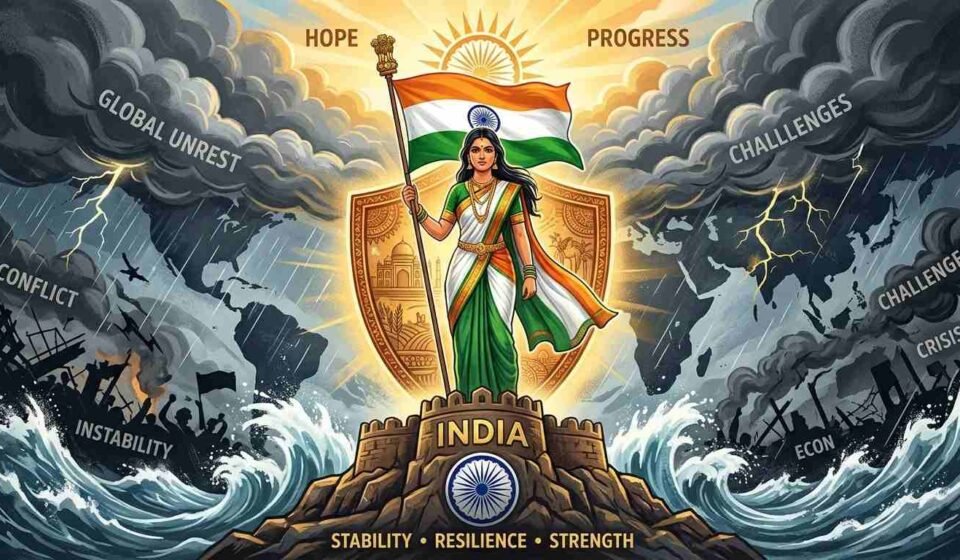

In an era where major European nations—ranging from France and Spain to Albania—are grappling with massive, often violent anti-government protests, the question of national stability has taken center stage. Recent reports show widespread public fury driven by economic uncertainty, high education expenses, corruption, and controversial environmental projects (such as the contentious tourism initiative threatening natural habitats in Albania). Streets have witnessed intense clashes, tear gas, water cannons, and the burning of public infrastructure.
Curiously, this wave of intense civil unrest prompts a deeper comparative analysis: why does a country like India, with a massive young population and similar socio-economic pressures, remain remarkably resilient against such chaotic uprisings?
According to regional media analyses, a vital differentiator lies in leadership and national resolve. Observers note that strong governance and unwavering patriotism at the top play a critical role in preventing public grievances from boiling over into total systemic collapse. In India’s context, Prime Minister Narendra Modi’s decisive leadership, strict administrative control, and clear prioritization of national interest have insulated the country from the kind of anarchic destruction currently plaguing parts of the West.
While democratic dissent and youth aspirations are a natural part of any growing economy, strong leadership ensures that public dialogue does not derail into national disintegration. India’s ability to maintain public order during global turbulence stands as a testament to effective crisis management and robust political stewardship.
Source – https://www.youtube.com/watch?v=hA0BSb52GUU&start=2&themeRefresh=1
